5 Tips for Successful Shared Governance

Nurses began the shared governance journey in the 1980s, realizing the importance of nurses having a direct impact on patient outcomes when they are involved in decision making at the point of care. Today, shared governance continues to evolve, with professional ownership to practice, quality, competence, and knowledge. It can seem daunting to move to a shared governance structure or to evolve your structure to keep up with current best practices. Here are 5 of our tips for successfully establishing and improving a shared governance structure.
Read Our Tips
-
- Start with the “WHY”: Begin with the goals for your professional governance framework in mind. Invite everyone, especially your clinical nurses, to participate in determining your purpose and your top goals for your framework.
- Keep the Patient at the Center: Once you have goals in mind, consider how the patient fits within each one. Ultimately, your purpose is to serve the patients with better outcomes, so always consider how each decision will benefit the patient.
- Create a Grid of Accountability: Assign roles to each person involved in your shared governance framework so that everyone has clear expectations and understanding of their responsibilities. Always ask where each decision belongs and who need to be involved.
- Create a Positive Environment: To ensure your work is as productive as possible, be sure that you are fostering a positive shared governance environment. Leave badges at the door, and let everyone’s expertise be heard. This will help you conduct robust meetings that include influential decisions made by the right people.
- Use Your Data to Your Advantage: Whether it’s patient outcome data, RN satisfaction, or patient experience, be vigilant about recording and analyzing your data. This will help you find “pain points” to focus your goals on, and it will also help with your designation requirements. It will also help your shared governance group demonstrate ROI on projects your work councils are participating in.
These structures and behaviors enable us to connect, create consistency, provide clarity, and make actions happen with real accountability. To learn more about good shared governance practices, be on the lookout for the upcoming Tipton Health webinar on shared governance featuring Roxanne Holm, MSN, RN, NPD-BC, director of Nursing Excellence and Magnet® Programs, John Miur Health!
Evidence for Pathway to Excellence® Submissions: To Include or Not Include?

Preparing a Pathway to Excellence® submission may feel like an opportunity to showcase everything your organization has accomplished. While your inclination may be to provide validation of the many processes and policies you’re describing in your Element of Performance (EOP) responses, it’s actually the concise, relevant documentation that will prove more effective.
Read Our Recommendations on Pathway Submissions
The Pathway to Excellence framework is designed to evaluate how well organizations meet specific standards within the nursing practice environment. Appraisers will be evaluating your responses to ensure they describe the necessary criteria to meet intent. With the exception of three EOPs that require documented evidence (EOP 2.6, EOP 2.8, and EOP 6.1), supporting evidence documents are not necessary to prove your EOP response is true. In fact, excessive evidence may actually make it harder for appraisers to focus on the key elements that describe how your nursing practice environment meets the Pathway to Excellence standards.
Ultimately, it’s the Pathway Nurse Survey that validates an organization’s submission document. After a submission passes appraisal, the organization moves to the nurse survey phase, where nurses and non-nurse midwives at all levels throughout the applicant organization are invited to participate, sharing their perceptions of the workplace environment. The survey asks questions about the presence of essential elements of a positive work environment as defined by 2024 Pathway to Excellence criteria. In order to “pass” the nurse survey, 60% of the organization’s nurses must participate in the survey, 21 of the 28 survey questions must receive a 75% or better rating, and none of the survey items can receive a rating below 50%. Achieving this essentially “proves” your submission document is a testament to a positive nursing practice environment.
While there’s no limit on providing supplemental evidence, we recommend adding it with discretion. As you prepare your submission components, consider asking yourself, “Does this piece of evidence not only directly support, but also enhance the standard? Does it add new insight?” If the answer is no, we’d recommend leaving it out, and focusing on finding the right words to ensure your description meets intent. If you’ve accurately described your nursing practice environment, then your nurses will provide the proof that your organization meets the Pathway to Excellence standards.
008, Patient Advocacy
Policies & Procedure
This issue’s Coaching Corner continues our series on OO7, OO8, and OO9, this time zeroing in on OO8 – Patient Advocacy Policies & Procedures. This document is similar to OO7, except our goal is to provide policies related to the treatment of patients, rather than staff.
Read More about OO8
There are two primary categories that we recommend including in your OO8 document.
-
- Diversity, Equity, and Inclusion: This category should demonstrate that the hospital is doing the “right thing” for patients. Relevant policies may be related to nondiscrimination, patient rights and responsibilities, compliance with the Americans with Disabilities Act, service animals, LGBTQ+ patient support, etc.
- Cultural Competence: Our goal here is to demonstrate that the hospital has policies to meet patients’ cultural or religious needs. Examples may include policies related to patients with food allergies, religious dietary requirements, patient religious/cultural needs, etc.
Tipton Health’s Support for Your Magnet® Journey: Mastering the Fab 5
The Magnet® 2023 Manual identifies five critical, data-driven documents, known to Tipton Health as the Fab 5, that demonstrate a hospital’s nursing outcomes. Achieving strong performance across these documents is especially vital for organizations pursuing Magnet® with Distinction.
Fab 5 Documents:
-
- EP3EO – RN Satisfaction/Engagement Survey
- EP19EO – Nurse Sensitive Indicators (Inpatient)
- EP20EO – Nurse Sensitive Indicators (Ambulatory)
- EP21EO – Patient Experience (Inpatient)
- EP22EO – Patient Experience (Ambulatory)
Learn How Tipton Can Help You Master the Fab 5
Data Analysis & Heat Mapping
Tipton reviews your organization’s current data (including RN Satisfaction survey results, nursing clinical outcomes, and patient experience scores) and delivers a comprehensive heat map across all nursing units. This visual tool clearly highlights top-performing units alongside areas with the greatest opportunity for improvement. From there, Tipton’s data services analysts partner with nursing excellence consultants to apply evidence-based practices to help build targeted, strategic action plans. Our consultants and analysts provide hands-on support across research, barrier identification, plan development, implementation, project management, and trend tracking. Our consultants can also assist with posters, presentations, and publications. We’re your dedicated partner in achieving Nursing Excellence.
Engaging Tipton early, before your Fab 5 documents are finalized, allows our team to conduct an initial data review, surface discrepancies, and address errors well ahead of submission. This proactive approach maximizes your time to strengthen metrics and positions your organization for the best possible outcome.
Fab 5 Narrative Creation Support
Tipton offers flexible narrative support to meet your team exactly where you are:
-
- Partial Narrative Review:
For teams who have already begun their narratives, Tipton’s experts provide detailed feedback and guidance to sharpen your content. We also assist with building clear, compelling summary tables to strengthen your submission. - Full Narrative Review:
Do you prefer a fully managed approach? Tipton’s team handles the entire narrative from start to finish, including crafting the overview context, building benchmark and summary tables, and organizing vendor-supplied graphs. When vendor visuals aren’t available, Tipton creates custom, presentation-ready graphs on your behalf. (Tipton graphs meet all the criteria required in the Magnet® 2023 Manual.)
- Partial Narrative Review:
Tipton Health’s Data Services team offers a full spectrum of support for your Magnet® Fab 5 documents. To learn more or get started, reach out to your Client Advocate or contact our Data Services Senior Manager today.
Going Beyond Magnet
Earning Magnet® Designation is a landmark achievement, but the work of Nursing Excellence doesn’t end there. Sustaining and advancing the outcomes that define great nursing care requires ongoing commitment to improving patient outcomes, deepening nurse engagement and satisfaction, strengthening shared-governance structures, and fostering nursing leadership collaboration. Tipton Health is ready to be your long-term partner in that journey. Contact us to learn how we can support your continued Nursing excellence for your staff and the patients that you serve.
Product Update
Tipton Direct: What’s New and What’s Coming

We have been busy making Tipton Direct even better for you, and we wanted to take a moment to share two updates we are excited about.
See the Tipton Direct Updates
A New Step When You Upload
You may notice something a little different the next time you submit a document in Tipton Direct. Just before your upload goes through, you will be asked to indicate what kind of support you are submitting for: Writing Support, Full Write, or ADAM.
Unless your Tipton Client Advocate has specifically instructed you otherwise, please select Writing Support. This is the correct choice for the vast majority of our clients. If your documents fall under Full Write or ADAM, your Client Advocate will let you know. This simple step helps us make sure every document gets to exactly the right place and gets the attention it needs.
ANCC Pathway to Excellence® Is Coming to Tipton Direct
We are thrilled to share that Phase 2 of Tipton Direct is officially underway, and it is bringing Pathway to Excellence clients into the portal! Everything you love about Tipton Direct, uploading and downloading documents, tracking your status at a glance, and accessing detailed reports, will all be available for your Pathway journey, too.
We cannot wait to bring the same streamlined experience our Magnet clients rely on to the Pathway community. Stay tuned for more updates as we get closer to launch!
As always, please reach out to Aimee Porter at aimee@tiptonhealth.com with any questions.
Meet the Team – Deborah Martin
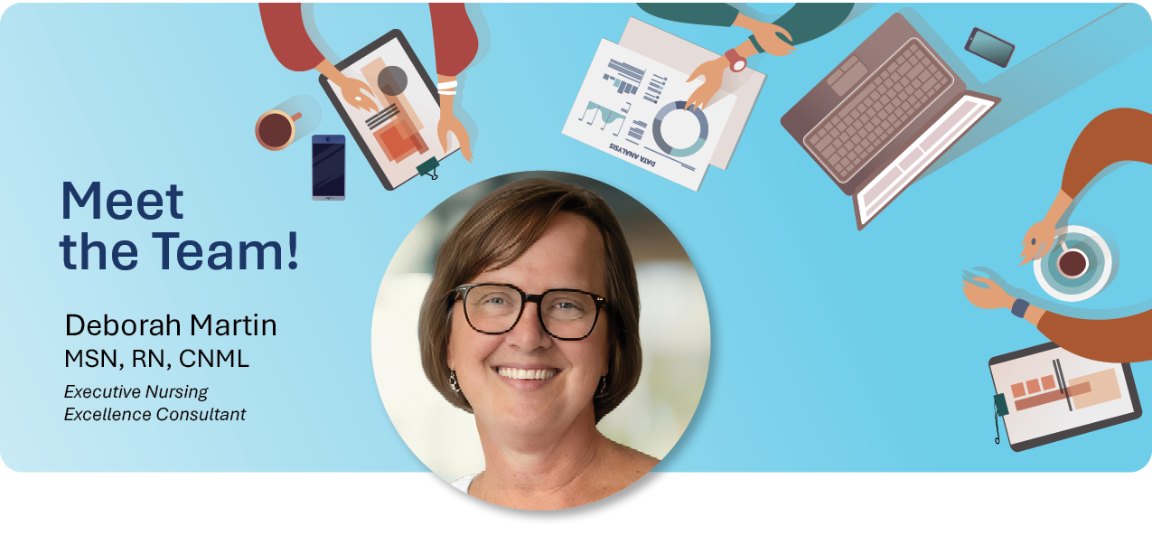
Deborah Martin, MSN, RN, CNML, has over 35 years of nursing experience as a pediatric intensive care nurse, nursing professional development specialist, case manager, nurse manager, nurse director, and Magnet® Program director. She led an organization to its first Magnet Designation. She later transitioned to another hospital as the Magnet Program director and led that organization to Magnet re-designation.
Learn More About Deb
What is one thing that you wish clients knew as they embark for Magnet® Designation?
It is truly a journey. Enjoy it, and proceed with the mindset that it is the “right thing to do.” Magnet is the designation as you proceed through your journey.
What advice would you give to someone at the beginning of their Magnet® Designation journey?
Learn from others, take it all in, and pace yourself.
Could you share a writing tip that would be helpful to your clients?
Assure that minutes reflect your meetings and are stored in a central location. These are key pieces of evidence for non-EO documents.
Do you have any advice for clients nearing the end of their Magnet Designation journey?
Stay organized, fine tune your to do list, (daily, weekly, etc.). Ask for help!
What would you say is the most rewarding part of your job?
As an executive nursing excellence consultant, I partner with clients at varying stages of their journeys. I learn from them, and we learn together.
What is your favorite Magnet example?
That’s a hard question. I like EP6, as it highlights the work of the interprofessional team and the work they do every day.
What hobbies are your passionate about and why?
We live near the water, so spending time enjoying the water with family, friends, and with our two dogs is my happy place. I also love some good yard work and planting my herb garden.